

Pull to refresh
 2026 iThome Ironman
Series 20 chapters

2026 iThome Ironman

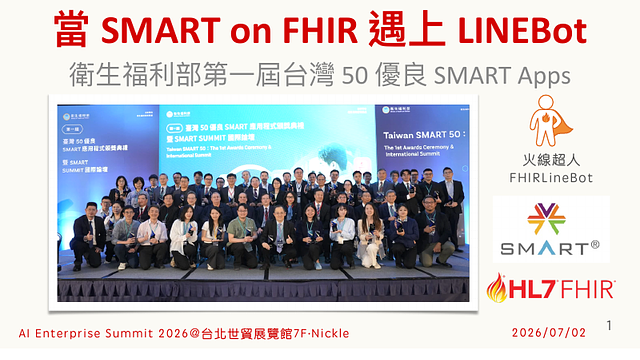
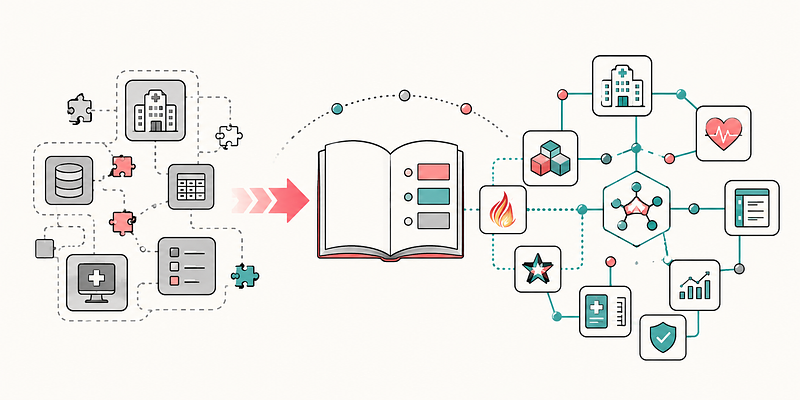
The story begins with a major policy shift at the Ministry of Health and Welfare’s Department of Information Management. After Director-General Chien-Chang Lee took office, the department began promoting FHIR and SMART on FHIR to address the siloed nature of hospital information systems, and even invited one of the founders of SMART to Taiwan. FHIR’s support for multiple programming languages and its Docker-friendly ecosystem aligned perfectly with the author’s preferred technology stack. When the inaugural Taiwan Top 50 SMART Apps program—dubbed the healthcare sector’s equivalent of Taiwan’s 0050 ETF—was launched, the author submitted an application as an opportunity to put the idea to the test. At the outset, this series defines its scope as “SMART on FHIR application development in the broader sense.” It covers not only the core SMART App Launch standard, but also the complete end-to-end development journey of building real-world healthcare applications.

Start reading

Latest Posts

View all posts
4 posts Browse all tags
 2026 iThome Ironman
Series

2026 iThome Ironman

1 chapter 24
Watch Notes
Series

Watch Notes

1 chapter 24

I Work at a Military Hospital, and I Just Claimed Three of AI's Hardest Problems

22 0
SMART on FHIR 火線超人(FHIRLineBot)
Series

SMART on FHIR 火線超人(FHIRLineBot)

1 chapter 75

Latest Wiki

View all wiki
What Is Loop Engineering?

What Is Loop Engineering?

Take on the new term loop engineering (the shift from prompt→context→harness→loop, traced to Boris Cherny and Peter Steinberger), put on one table with TDD/SDD. TDD/SDD are the source of truth; loop engineering is the wiring of the iteration, and TDD/SDD are exactly the verify-and-stop step inside the loop. Maps onto my own Spectra (SDD plus a human reviewer) and Rails (the substrate that makes loops converge). Closes with the honest doubt: is this just hype to make you burn more tokens? Answer: it cuts both ways. The marketing version (more autonomy) burns tokens, the engineering version (faster convergence, stop when you should) saves them.

loop-engineering tdd sdd
36 views
Taiwan's HIS Proprietary Lock-in, and Why SMART on FHIR Is the Only Way Out

Taiwan's HIS Proprietary Lock-in, and Why SMART on FHIR Is the Only Way Out

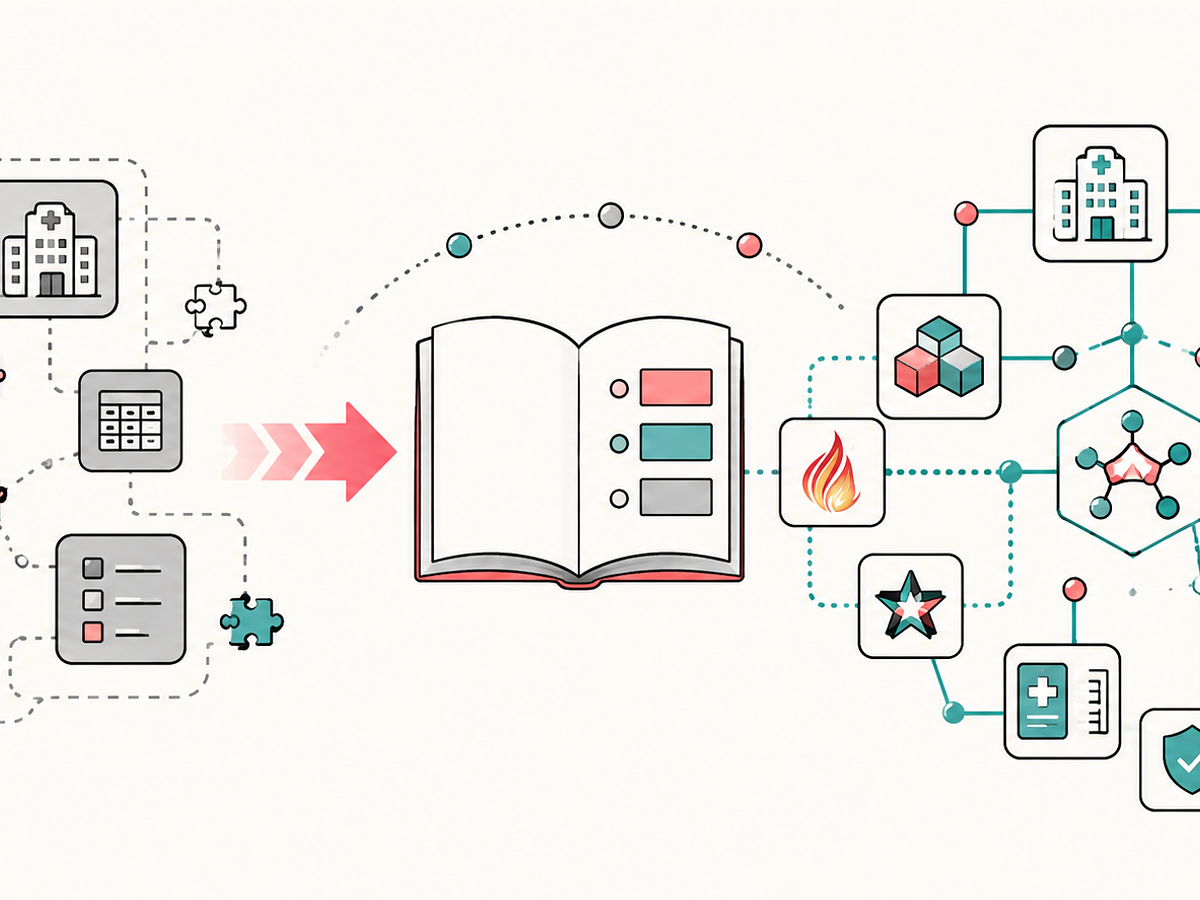
This is the English version of a piece about something I deal with every day in a hospital IT office, that every hospital in Taiwan runs its own Hospital Information System, each incompatible with the next. I call this phenomenon proprietary lock-in, which most people would recognize as data silos. Each hospital has its own data model and an interface only its original vendor understands, so you cannot pull records across hospitals, and adding any new feature means going back to that vendor, which is slow and expensive, and AI and innovation simply cannot get in. I argue you cannot solve this by wiring up one more interface, the only way out is to converge the data model and the access method onto an open standard, namely FHIR. But FHIR alone is not enough. What actually breaks vendor lock-in is SMART on FHIR, which adds OAuth2 authorization and an app-launch mechanism on top of FHIR's data and API, so any standard-compliant app can attach safely to any hospital's system, write once and run anywhere. The US used the 21st Century Cures Act to mandate that EHRs open this API, Epic and Cerner both support it, and it is already the de facto standard. Taiwan has the MOHW's TW Core IG as a foundation, so the direction is right, what blocks us is sunk investment and vendor incentives. The piece explains where lock-in came from, what it costs, why standardization is the only fix, and why it is SMART on FHIR and not just FHIR, and it is honest about the real obstacles to landing this in Taiwan.

smart-on-fhir fhir his
51 views
Sega on AI EP1, Annotated: Is Taiwan an AI Superpower or an AI Foundry?

Sega on AI EP1, Annotated: Is Taiwan an AI Superpower or an AI Foundry?

A conversation between iKala founder Sega Cheng and Dr. Lee-Feng Chien, former MD of Google Taiwan. From the Computex-fueled Capital Island phenomenon through whether AI is a bubble, the agent era as a hard requirement, a projected 24x jump in token consumption by 2030 and hardware optimization, US East vs West views, Taiwan's five shortages and internationalization by acquisition, luckily Taiwan's software was weak, Agentic Commerce and the Zero-Click economy with GEO, and R&D compressed from ten years to six months. Closes with the Ask / Use / Manage / Build framework for becoming the 1%.

ai taiwan agentic-ai
71 views

Latest Slides

View all slides